DawnOS software stack
DawnOS is the GNU/Linux distribution for Divine D. It is based on Mobian and the Debian ecosystem and repositories, runs mainline Linux 7.1 with Dawndrums patches, and uses Plasma Mobile or Phosh as the touch interface.
Native Linux
DawnOS runs directly on the hardware. The Linux kernel boots on the RK3588S and drives every device itself: display, GPU, cameras, audio, radios and sensors. There is no compatibility layer and no second operating system underneath.
Applications are ordinary Linux programs, the same software that runs on Linux desktops and servers, installed from the Debian and Mobian repositories. You can open a terminal, read the logs, rebuild a package or replace any part of the system you have the source for.
| On Divine D. | |
|---|---|
| Kernel | Linux 7.1 with Dawndrums patches, drivers for every part of the board |
| User space | systemd, PipeWire, NetworkManager, ModemManager, BlueZ, Mesa |
| Open drivers | Panthor on the GPU, Rocket on the NPU, brcmfmac on Wi-Fi |
| Access | root access, packages, logs and source |
Debian and Mobian
Debian is one of the oldest community-run distributions and is known for its stability. Packages go through a long testing process before a stable release, and stable releases get security updates for years. Tens of thousands of packages are available from its repositories.
Mobian is Debian for mobile devices: phone-friendly packaging of the touch interfaces, telephony and mobile services, built on Debian repositories.
DawnOS leverages that stability and adds what Divine D. needs:
- support for the board's hardware (kernel patches, device tree, firmware, Dawndrums services);
- performance optimisation for the RK3588S;
- fixes for instability as development goes.
Touch interfaces
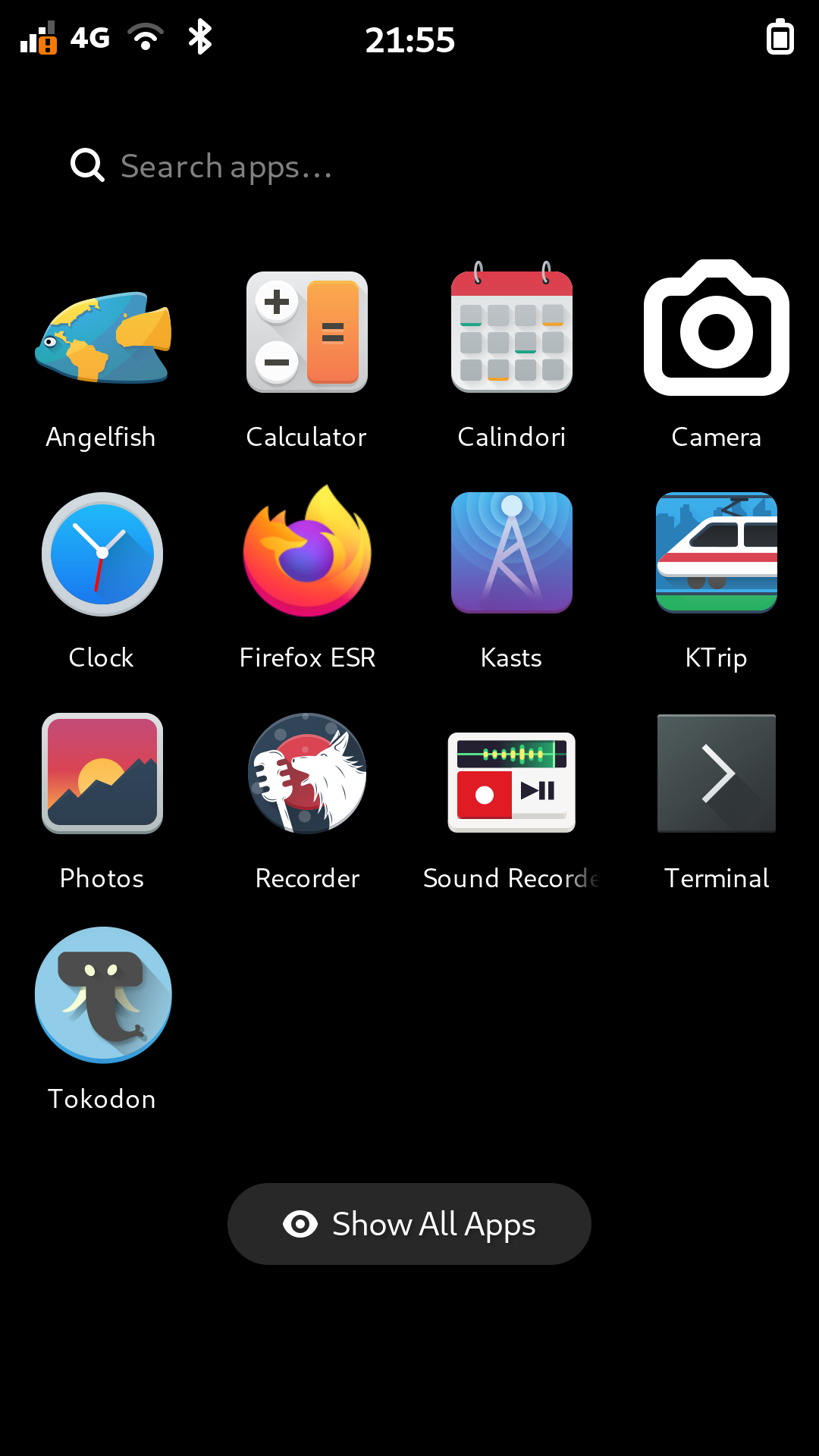
Both interfaces run on Wayland with GPU acceleration. The rest of the system is the same whichever one you use.
| Interface | Project | Toolkit |
|---|---|---|
| Plasma Mobile | KDE | Qt and Kirigami |
| Phosh | GNOME-based phone shell | GTK |
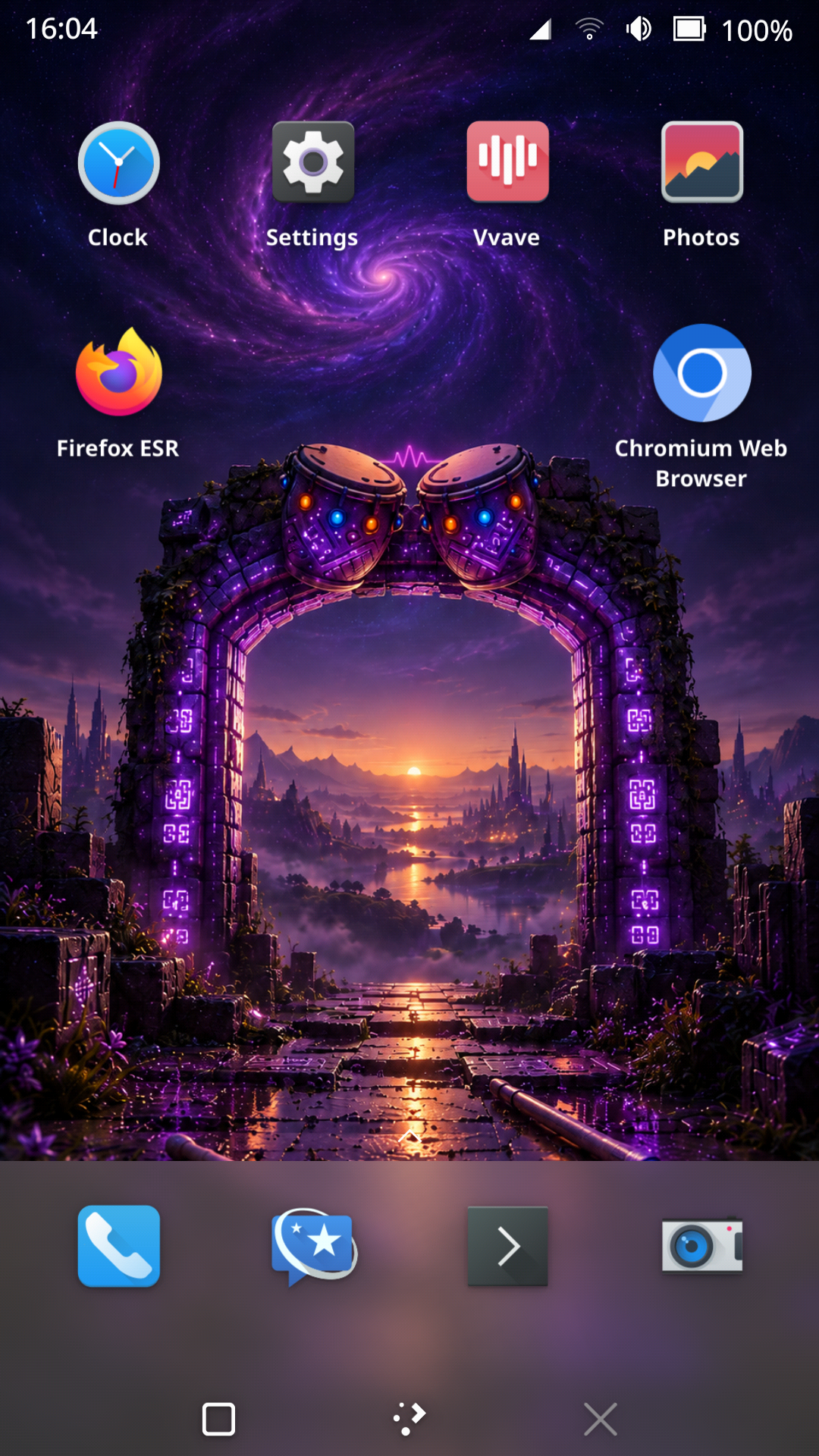
The development configuration uses Plasma Mobile 6.7.4. The MVP video on the website shows DawnOS running Plasma Mobile on MainPCB Rev. 1.1.
Software layers
From the boot ROM to applications. Upstream and Dawndrums are open source; Binary means no source is available; To confirm means the source is not yet recorded in the firmware inventory.
| Layer | Component | Source |
|---|---|---|
| 07 Applications | divine-camera, camera app based on KDE Plasma Camera | Dawndrums |
| Debian and Mobian applications | Upstream | |
| 06 Touch interface | Plasma Mobile | Upstream |
| Phosh | Upstream | |
| 05 Dawndrums services | dd-audiod, dd-batteryd, dd-powerd, dd-sensord, dd-lorad, dd-agentd (see Services) | Dawndrums |
| 04 Media and graphics | Mesa (Panthor, Vulkan) | Upstream |
| PipeWire | Upstream | |
| libcamera and the RKISP2 IPA, Dawndrums fork with the Divine D. pipeline and tuning (see camera pipeline) | Dawndrums | |
| 03 Base system | Debian and Mobian: packages, repositories, systemd, NetworkManager, ModemManager, BlueZ | Upstream |
| 02 Kernel | Linux 7.1, mainline | Upstream |
| Dawndrums patches and the Divine D. device tree | Dawndrums | |
| Mali-G610 CSF firmware, loaded by Panthor, from linux-firmware | Binary | |
| Wi-Fi and Bluetooth firmware (BCM43752), loaded by brcmfmac and the Bluetooth driver | Binary | |
| 01 Bootloader | U-Boot, Dawndrums tree, fork of radxa/u-boot | Dawndrums |
| Trusted Firmware-A (BL31) | To confirm | |
| DDR init and SPL loader (rkbin) | Binary | |
| 00 Boot ROM | RK3588S boot ROM, in the SoC, not replaceable | Binary |
On the radio modules
Each radio runs its own firmware on its own processor, outside the RK3588S.
| Module | Firmware | Source |
|---|---|---|
| Cellular modem (SIM7600G-H) | Baseband firmware, runs on the module | Binary |
| LoRa (RAK3172, STM32WL) | Module firmware, reflashable from Divine D. over UART | Open source |
Which features run on upstream code alone is tracked on the upstream status page. The hardware results per component are in the Hannibal test matrix.